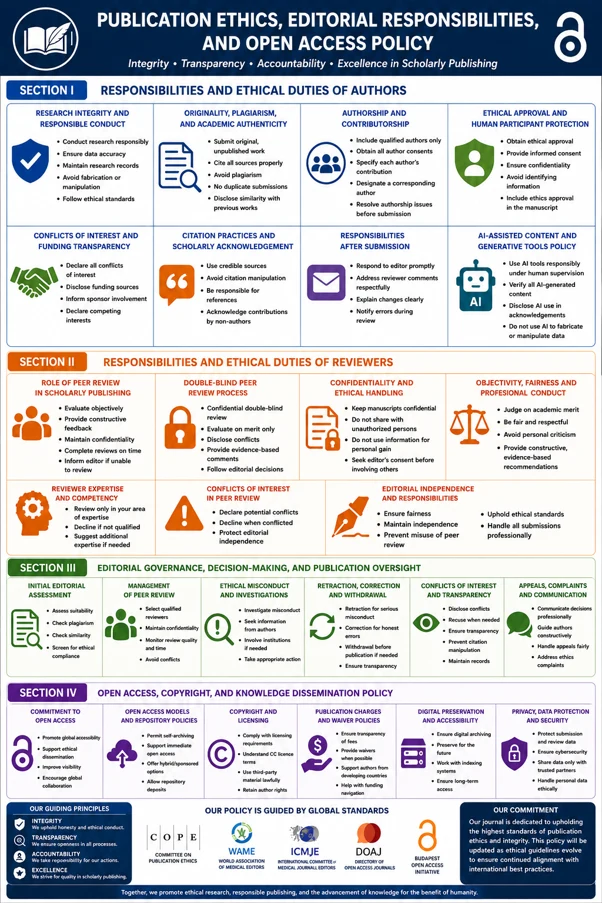
Open Access, Copyright, and Knowledge Dissemination Policy
Publishing Models
The purpose of the IJBADM is to achieve maximum distribution of academic papers while offering flexibility for publishing the papers authored. In accordance with author choice, budgetary constraints, and the policies of IJBADM, manuscripts can be published according to the Subscription-Based Publication Model or Open Access Publication Model. In both cases, manuscripts undergo the same editing and peer reviewing processes.
Subscription-Based Publication Model
In the Subscription-Based Publishing System, authors can make sure that their article does not go immediately out into the public domain, once they submit their articles to be published. Authors can use a system wherein readers have to subscribe or be a member of an institution or university to have access to their papers. This can be applicable for authors without funds for OA publication or those that do not have to publish OA under their agencies’ conditions.
Benefits of Subscription-Based Publishing
For authors that publish using the subscription-based system, they can take advantages of:
- Publication with no need to pay any article processing charges (if required).
- Peer review and editing services, like those provided to other published papers in the IJBADM.
- High visibility via library subscriptions and database indexing.
- Self-archiving of accepted papers according to the IJBADM
Action Plan for IJBADM
IJBADM may:
- Publish articles using a traditional access system that involves subscription to the IJBADM
- Apply the same editorial and peer-review process to both subscription and open-access articles.
- Allow for some form of self-archiving of articles accepted for publication.
- Provide access to the IJBADM via institutional subscriptions and other sources.
Open Access Publication Model
Through Open Access, research becomes freely and permanently accessible via the Internet the moment it is published. According to this model, users have free access to browse, read, download, distribute, and cite published articles without any limitations. It could be noted that open access is highly favourable to the authors who seek greater dissemination of their research, funding agency mandates, greater visibility of their work, and greater research engagement opportunities.
Benefits of Open Access Publishing
Some of the potential advantages that authors who publish their work using the Open Access approach could benefit from:
- Increased exposure for their research.
- Broader distribution of their work.
- Increased chances of getting citations.
- Complying with open access policies.
- Immediate worldwide access.
Commitment to Open Access Publishing
IJBADM supports responsible open access publishing to encourage global dissemination of scholarly knowledge and increase accessibility of academic research.
IJBADM supports responsible open access publishing to improve the accessibility, visibility, and dissemination of scholarly knowledge while protecting author rights and publication integrity.
Relevant Open Access Standards and Guidance:
- Directory of Open Access Journals Best Practice Principles: https://doaj.org/bestpractice
- Budapest Open Access Initiative: https://www.budapestopenaccessinitiative.org/
- Creative Commons Licensing Framework: https://creativecommons.org/licenses/
Action Plan for IJBADM
IJBADM aims to:
- Promote wider accessibility of scholarly research.
- Support responsible and ethical knowledge dissemination.
- Improve visibility and discoverability of published work.
- Encourage international scholarly collaboration.
Open Access Options
IJBADM may support one or more of the following Open Access routes:
Green Open Access (Self-Archiving)
There is an option for authors to submit the Author Accepted Manuscript (AAM) to institutional or other repositories and/or personal pages provided that the IJBADM guidelines are followed.
Gold Open Access
Option for authors to publish their article under Gold OA such that the published version is made immediately and freely available on its date of publication. In relevant cases, publication may entail the payment of Article Processing Charges (APCs).
Action Plan for IJBADM
IJBADM can be considered to allow:
- Immediate open access publishing of scientific studies.
- Repository self-archiving according to IJBADM
- Deposits in institutional or subject-based repositories.
- Hybrid, sponsored, or full open access publishing options where applicable.
Copyright and Licensing
IJBADM respects the intellectual property rights of authors while supporting lawful scholarly sharing and reuse.
Action Plan for Authors
Authors should:
- Comply with IJBADM copyright and licensing requirements.
- Understand applicable Creative Commons licence terms.
- Ensure lawful use of third-party material.
- Retain and exercise author rights according to IJBADM policy.
Publication Charges and Waiver Policies
Publication-related fees, where applicable, should be communicated transparently.
Action Plan for IJBADM
IJBADM can:
- Guarantee that all publication fees (APCs) will be transparent and made known before accepting any papers.
- Make APC exemptions available to authors with a corresponding affiliation from countries that have been listed by the World Bank as low-income economies: https://datahelpdesk.worldbank.org/knowledgebase/articles/906519-world-bank-country-and-lending-groups
- Apply a discount (up to 50%) on the APCs for authors whose affiliation is from lower-middle economies where there is less funding available for research.
- Offer further exemptions or discounts on a case-by-case basis for authors who show evidence of financial difficulties and/or a lack of institutional funding support.
- Help authors from developing countries in general if possible.
- Help authors deal with any funding issues they might have and how they should approach APC waivers.
Conflicts of Interest and Editorial Transparency
Conflicts of interest must be disclosed by editors and managed properly.
Action Plan for Editors
Our editors must:
- Remove themselves when there are conflicts on papers.
- Conduct their editorial processes with transparency.
- Ensure no citation manipulation takes place.
- Keep proper records of the editorial process.
Appeals, Complaints, and Author Communication
IJBADM is committed to professionalism and complaint/ appeal process.
Action Plan for Editors
The Editors of IJBADM will be required to:
- Convey decisions politely and professionally.
- Guide the authors constructively during revisions.
- Conduct appeals in a fair manner.
- Take appropriate action against any ethics complaint/ dispute.
Digital Preservation and Long-Term Accessibility
IJBADM supports responsible digital archiving and long-term preservation of scholarly content.
Action Plan for the IJBADM:
- Ensure safe archival practices for digital storage.
- Ease the availability of research for future generations.
- Work with indexing and repository systems when necessary.
Privacy, Data Protection, and Information Security
IJBADM recognises the importance of protecting personal and professional information associated with scholarly publishing.
Action Plan for the IJBADM
IJBADM pledges to:
- Ensure confidentiality of submission and review details.
- Hold cybersecurity and data security measures in high regard.
- Share data exclusively with reliable publication and indexing organizations.
- Handle personal details with care and ethics.
The aspects of ethics and publication principles are highly crucial in IJBADM as we try to uphold the standards of ethical publication as one of our main goals. All authors, reviewers, and editors in our IJBADM should abide by internationally recognized ethical publication principles. The policy of IJBADM keeps on changing as it evolves together with the internationally accepted ethical guidelines provided by such organizations as COPE, WAME, ICMJE, DOAJ, and many others.